Safety Glove Care & Maintenance
A glove only protects you while it's in good condition. The right care keeps it working longer and tells you when it's time to replace it. The wrong care, like machine washing a leather welding glove or bleaching a cut-resistant one, can quietly strip out the protection you paid for.
This page gives general guidance for every Elliotts glove range. The care instructions on each glove's product data sheet (PDS) always come first. For selection, use and maintenance of gloves in general, see AS/NZS 2161.1:2016.
Quick reference

Care for every glove
Before each use
Check both gloves, inside and out. Don't use a glove that has:
- holes, cuts, burn marks or worn-through patches
- open seams or broken stitching
- hardened, cracked, shrunk or brittle material
- swelling, softness, stickiness or discolouration (a sign of chemical attack on coated and chemical gloves)
- oil, grease, fuel or chemical contamination it wasn't designed for
- damp or wet insulation, on cold and heat gloves
After each use
- Take gloves off carefully, especially if they're contaminated. Don't touch the outside with your bare hands.
- Brush or wipe off dirt, spatter and dust.
- Let them dry at room temperature with air around them, cuffs open. Sweat-soaked gloves left in a bag won't dry and break down faster.
- If you wear gloves all day, rotate two pairs so each has time to dry out.
Storage
- Store gloves clean and dry, in a cool place out of direct sunlight.
- Keep them away from heat, solvents, fuels and ozone sources such as electric motors and welding machines, which attack rubber and coatings.
- Don't crush or fold them tightly. Creases weaken coatings and aluminised surfaces.
- Keep spares in their packaging until needed.
Hygiene
Gloves aren't shared equipment. Issue each worker their own pair, and wash your hands after taking gloves off.
When to replace
Replace gloves on condition, not on a calendar. If a glove fails the before-use check, or you're not sure it will still protect you, replace it. Any glove that has been through a fire, an arc flash, a molten metal splash or a serious chemical exposure should be taken out of service, even if it looks fine. Dispose of contaminated gloves as you would the contaminant.
Leather welding and handling gloves
Covers our welding gloves (Big Red, Kev Blue, The Lefties, WAKATAC, The Legend range, Black & Gold, TigMate, WeldMark) and leather handling gloves such as Western Rigger.
Don't machine wash or soak leather gloves. Water and heat shrink and stiffen leather, change the fit and can reduce heat protection. The ratings on the glove are based on testing gloves as supplied, not after washing.
To clean
- Brush off dust, grinding dust and spatter with a stiff brush.
- Spot-clean marks with a damp cloth and a little mild, pH-neutral soap. Keep the leather as dry as you can.
- Wipe off any soap with a clean damp cloth.
To dry
- Air-dry at room temperature, away from heaters, direct sun and hot surfaces. Never put leather gloves in a dryer or on the welding machine to dry.
- Flex the fingers and palm as they dry to keep the leather supple.
Don't
- Use heavy oils, waxes or petroleum-based leather conditioners. They soak into the leather and can increase flammability.
- Keep wearing gloves soaked in oil, grease or fuel. Replace them
- Weld in wet gloves. Wet or holed gloves are a known factor in welding electric shocks. Keep a dry pair on hand.
Make them last longer
- Use a glove saver over the back of your welding glove in high-heat positions. It takes the radiant heat and spatter so your glove doesn't.
- Don't use your welding gloves to pick up hot work for longer than their contact heat rating allows. Use tongs or pliers.
- If your left glove always wears out first, try The Lefties: two left-hand gloves in a pack.
G-Flex technical gloves
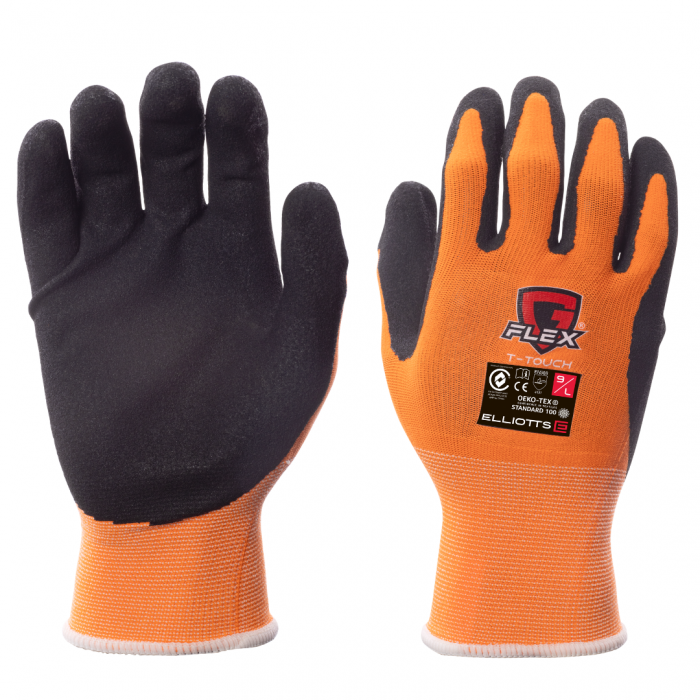
G-Flex gloves have knitted nylon or Dynamax liners with nitrile, T-Touch, AirTouch, latex or PU coatings. They can be machine washed.
To wash
- Pre-rinse: rinse the gloves under warm water to remove visible dirt.
- Wash: machine wash in warm water, no hotter than 40°C, with commercial laundry detergent, on a regular cycle of about 20 minutes.
- Rinse: rinse thoroughly in warm water (40°C) to remove all detergent. Leftover detergent can irritate skin and affect grip.
- Dry: tumble dry on low heat, no hotter than 40°C, until just dry, or air-dry. Too much heat damages the coating and the liner fibres.
Don't
- Dry clean. Dry cleaning solvents damage the coatings.
- Use chlorine bleach or fabric softener.
- Wash or dry above 40°C.
How often to wash depends on how dirty the gloves get. Oil and grease trapped in the coating reduce grip, so wash oily gloves more often.
Mec-Flex mechanical gloves
Mec-Flex gloves use Hyde-Tex synthetic leather palms, which are machine washable, with fabric backs and, on some models, a TPR impact exoskeleton.
- Close any hook-and-loop cuff tabs before washing so they don't snag.
- Machine wash in warm water, no hotter than 40°C, on a gentle cycle with laundry detergent.
- Air-dry. High dryer heat can distort the TPR protectors and stiffen the palm.
- Don't use chlorine bleach or fabric softener.
- Goatskin-palm Mec-Flex gloves are leather: clean them as leather handling gloves, not in the machine.
Cut-resistant gloves and liners
Many Elliotts gloves use cut-resistant Dynamax or aramid liners, from G-Flex to our CRX welding gloves. The fibres are tough, but chemistry can undo them.
- No chlorine bleach. Chlorine bleach attacks aramid fibres fast. In DuPont's testing, Kevlar yarn kept 97% of its strength after washing with detergent, but only 12% with chlorine bleach.
- Oxygen-based bleach is fine for washable gloves, if the PDS allows it.
- Keep the heat low. High-performance polyethylene (HPPE) fibres are heat sensitive, so never tumble dry them hot.
- Check the outer too. Leather-outer gloves with a cut liner, like our CRX welding gloves, are cleaned as leather gloves.
ELLGARD high heat gloves and mitts
Aluminised gloves and glove savers
The aluminised surface reflects radiant heat. Once it's cracked, peeling or dull, it stops working.
- Wipe clean with a soft cloth and lukewarm water. Blot the aluminised surface. Don't rub or scrub it.
- Don't machine wash, and don't use bleach, solvents or strong alkaline cleaners.
- Air-dry fully in a ventilated place, away from direct sun and heaters.
- Store flat or hanging. Hard folds leave permanent creases that crack the aluminised film.
- Retire the glove when the aluminised film cracks, peels, bubbles or separates, or if there's a burn-through.
Aramid gloves and mitts (loop pile and woven)
- Shake out and brush off dust and debris.
- Don't soak them or use chlorine bleach. Check the PDS before any washing.
- Retire them when the pile is flattened or matted, or when the material is thin, hardened or scorched. Flattened loop pile holds less air and insulates less.
E-glass mitts (HeatShield and T1000)
- Shake and brush clean. Don't wash them.
- Retire them when the fabric frays, splits or becomes stiff, or when the T-GARD liner is damaged.
CryoSkin extreme cold gloves
CryoSkin gloves protect against extreme cold through dry insulation. If the insulation gets wet, the protection is gone.
- Keep them dry. Wipe the outside clean. Don't wash or soak them unless the PDS says so.
- If moisture gets inside, dry the gloves fully, inside and out, at room temperature before using them again.
- Before each use, check the seams and outer shell for tears or holes where cryogenic liquid could get in.
- Wear them loose enough to throw off quickly if liquid gets inside.
- They protect against brief contact and splashes. Never immerse your hands in a cryogenic liquid, even in gloves.
- Store a dry pair wherever cryogenic liquids are handled, so no one is tempted to use a damp pair.
ChemVex chemical gloves
Chemical protection depends on the glove material staying intact. Heat, wear and chemicals themselves all break it down.
Using and removing
- Before each use, check for holes by trapping air in the glove and rolling the cuff towards the fingers. Don't fill gloves with water to test them.
- Look for swelling, softening, stickiness, cracking or colour change. Any of these means the chemical is attacking the glove. Replace it.
- Before you take the gloves off, rinse the outside under running water.
- Remove them without touching the outside with your bare skin: peel the first glove off inside-out, then slide an ungloved finger inside the cuff of the second and peel it off over the first.
Cleaning, storage and disposal
- Rinse with clean water and mild soap. Never use solvents to clean chemical gloves.
- Hang to dry, fingers up, away from heat and sunlight.
- Store away from ozone sources such as electric motors, which degrade rubber and PVC.
- Throw gloves away (in a hazardous waste bin if required) no more than 8 hours after first contact with a chemical.
A glove that protects against one chemical may not protect against another. Check the ChemVex chemical resistance data for your chemical before use.
ArcFlash gloves
Arc flash gloves are rated protective equipment. Contamination and the wrong laundry products can reduce their protection.
- Clean them as soon as they're soiled. Oil, grease and flammable contamination reduce protection.
- Follow the washing instructions on the PDS and label.
- Never use chlorine bleach, fabric softener, starch or dryer sheets. They can mask or reduce flame resistance.
- Replace them after any arc flash or fire exposure, or when they're torn, holed or have stains that won't wash out.
- ArcFlash gloves aren't electrical insulating gloves unless the PDS says so.
Need help?
Talk to your Elliotts rep, call 07 3265 2944, or check the PDS on each product page for the care instructions for your glove.